
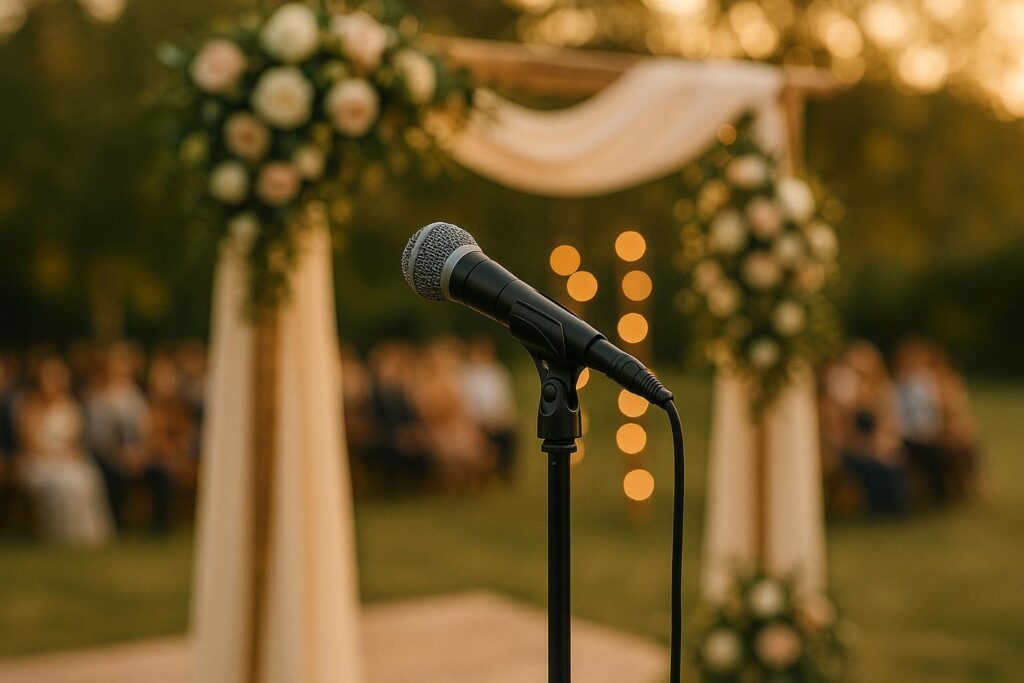
Getting the sound right at your wedding is just as important as the visuals. Proper microphone placement ensures your vows, speeches, and music are heard clearly, creating a seamless experience for you and your guests. Here’s a quick breakdown:
- Why Audio Matters: Clear sound ensures guests hear every word and enhances the quality of your wedding video.
- Common Issues: Wind, feedback, background noise, poor acoustics, and weather can disrupt audio quality.
- Microphone Types: Lavalier mics are discreet for vows, handheld wireless mics work well for speeches, headset mics suit officiants, and shotgun mics are great for group performances.
- Placement Tips: Lavalier mics should be clipped discreetly on attire, while handheld mics and stands work for speakers. Use directional mics for outdoor settings to reduce noise.
- Sound Checks: Test all equipment before the ceremony to catch issues like feedback or interference.
- Professional Help: Companies like One Click Events can handle setup, sound checks, and technical details, so you don’t have to worry.
Quick Comparison
| Microphone Type | Best Use Cases | Visibility | Price Range (AUD) |
|---|---|---|---|
| Lavalier (Lapel) | Vows, officiants | Low | $80–$1,200 |
| Handheld Wireless | Speeches, toasts | High | $150–$1,000 |
| Headset | Officiants, outdoor | Medium | $100–$1,500 |
| Shotgun/Boom | Groups, performances | Low | $200–$800 |
Good sound isn’t just about the equipment – it’s about planning. Test everything, position microphones carefully, and consider hiring professionals to ensure your wedding day sounds as perfect as it looks.
How to Record a Wedding | Audio Tips for Wedding Filmmakers
Types of Wedding Microphones
Getting the right microphone for your wedding can make all the difference in ensuring everyone hears those heartfelt vows, speeches, and toasts. Each microphone type has its strengths, and understanding what works best for your setting will help you achieve clear, reliable sound.
Microphone Types and Their Best Uses
Lavalier (lapel) microphones are small, clip-on mics that attach to clothing. They’re subtle and sit close to the speaker’s mouth, making them great for capturing clear audio, even outdoors where wind might be a challenge. These are perfect for vows or officiants and won’t interfere with your overall look.
Handheld wireless microphones are a popular choice for ceremonies and receptions. They allow speakers to move freely while maintaining strong audio quality. These mics are ideal for speeches, toasts, and readings, as they’re easy to pass around. However, they are more noticeable and require manual handling.
Headset microphones give you hands-free convenience and consistent sound. They’re especially useful for officiants who need to move around during the ceremony while staying audible to guests. While reliable, they are more visible than lavalier mics, which some might find less appealing.
Shotgun microphones are designed to capture sound from a distance without being noticeable. They’re perfect for group performances, choirs, or when you want a clean, equipment-free visual setting. However, they need precise aiming and can pick up background noise if not positioned correctly.
Here’s a quick comparison of these microphone types:
| Microphone Type | Advantages | Disadvantages | Best Use Cases | Approx. Price (AUD) |
|---|---|---|---|---|
| Lavalier (Lapel) | Small, hands-free, clear audio | May pick up clothing noise, battery-dependent | Vows, officiants, speeches | $80–$1,200 |
| Handheld Wireless | Flexible, reliable, easy to use | Highly visible, needs to be held | Speeches, toasts, readings | $150–$1,000 |
| Headset | Hands-free, steady sound | Visible, less discreet | Officiants, outdoor events | $100–$1,500 |
| Shotgun/Boom | Subtle, directional sound | Complex setup, limited mobility | Large venues, recordings | $200–$800 |
Choosing the Right Microphone
Picking the ideal microphone means considering your venue, setting, and personal preferences.
Venue size plays a key role. Larger spaces, like ballrooms or outdoor gardens, may need more robust audio solutions, while smaller, intimate venues can work well with simpler setups like lavalier mics.
Indoor vs outdoor settings also matter. Outdoor weddings often deal with wind and ambient noise. For example, a beach ceremony might require a directional microphone to cut through the sound of crashing waves, while a garden wedding could benefit from a shotgun mic to minimise background noise like rustling leaves or birds.
Weather conditions are especially relevant for Australian weddings. High humidity can affect battery life, and sudden temperature changes may impact equipment performance. Opting for durable, weather-resistant microphones can help your setup withstand unexpected shifts.
Background noise at your venue should guide your choice as well. If your wedding is near a busy Melbourne street or under a flight path, directional microphones can help minimise interference from these distractions. For quieter locations, other options like lavalier mics might suffice.
Finally, aesthetic preferences can influence your decision. Some couples prefer microphones that are nearly invisible, such as lavalier or shotgun mics, to maintain a clean look. Others are happy to trade subtlety for better sound quality with handheld or headset microphones.
For expert advice, companies like One Click Events can help you select the best microphone setup for your venue and needs. They offer full audio packages, including setup, sound checks, and technical support, ensuring everything runs smoothly. With the right equipment, every word and emotion will be captured perfectly, adding to the magic of your wedding day.
Where to Place Microphones During Weddings
Getting the sound right at your wedding is just as important as the visuals. Proper microphone placement ensures your vows, speeches, and music are captured clearly, creating a seamless experience for both audio and videography. Here’s how to set up microphones for the couple, officiant, speakers, and groups to achieve the best results.
Setting Up Mics for the Bride and Groom
Lavalier microphones are a go-to choice for weddings because they’re small, clip-on devices that capture vows clearly without being intrusive. Placement, however, needs to be adjusted depending on the attire.
For the groom, clip the lavalier mic onto the lapel of his suit jacket. Keep the cable hidden and secure the wireless transmitter to his belt. If there’s a significant height difference between the couple, make sure the mic is aligned to pick up both voices clearly.
For the bride, the placement can vary based on the dress. For strapless or low-cut designs, attach the mic near the chest area using discreet clips or tape. For dresses with higher necklines, position the mic along the collar or neckline, avoiding areas with heavy embellishments or overlapping fabric. The goal is to keep the mic invisible while ensuring clear sound.
Microphone Setup for the Officiant and Speakers
While the couple has their own mics, officiants and speakers require a different approach to ensure their voices are captured clearly.
For officiants, headset microphones are a practical, hands-free option. Position the boom near the mouth for consistent audio without it being intrusive. Alternatively, lapel microphones can be clipped onto their collar or lapel. Be mindful of ceremonial attire like robes, medals, or chains, as these can cause unwanted noise. Adjust placement accordingly to avoid interference.
Another option is a microphone stand. Secure it with a weighted base and angle it upward to pick up the officiant’s voice clearly.
Guest speakers and readers benefit from flexible options like wireless handheld microphones, which allow them to move around freely. For those who stay stationary, podium-mounted microphones work well. Always conduct a sound check before the ceremony to ensure everything is functioning as it should. Use gaffer tape or cable clips to secure any exposed cables, reducing the risk of tripping.
Audio Setup for Groups and Choirs
Capturing group performances, like choirs or musical ensembles, requires a different strategy. Overhead boom microphones are a great choice for discreetly recording group audio without cluttering the ceremony space. Position the boom mic to cover the height and spread of the group evenly.
For larger ensembles, multiple directional microphones are often more effective than a single mic. Space them evenly across the group to achieve balanced sound, and make sure there’s enough distance between microphones and speakers to avoid feedback. Outdoors, secure microphone stands with weighted bases to prevent them from toppling over, especially in windy conditions. Combining overhead and podium mics can also help capture both group performances and solo moments.
Environmental factors like wind, traffic, or air conditioning can affect audio quality. For outdoor ceremonies, position microphones to minimise background noise, while indoor setups may require adjustments to reduce interference from ambient sounds. Always perform a sound check to balance audio levels and ensure everything sounds perfect.
For couples who want to leave these technical details to the pros, companies like One Click Events offer full-service wedding packages. Their expertise includes precise microphone placement, cable management, and thorough sound checks, ensuring every word and note is captured beautifully without detracting from the visual appeal of your special day.
sbb-itb-9167268
How to Get Better Sound Quality
Achieving clear, professional audio involves more than simply placing microphones correctly. While proper placement is a critical first step, ensuring top-notch sound quality requires careful testing and fine-tuning. The difference between crisp, professional audio and disappointing sound often comes down to thorough preparation and addressing potential issues before they arise. Here’s how to ensure your ceremony’s audio is flawless.
Testing Sound Before the Ceremony
Sound checks are non-negotiable. Research shows that poor audio quality leads to up to 60% of complaints from wedding guests and videographers, with most issues stemming from inadequate testing or improper microphone placement.
Start your sound check at least 30 minutes before guests arrive. Test each microphone individually, ensuring it captures voices clearly and consistently. Have someone stand where the couple will exchange vows and speak at a normal volume to simulate real conditions. This provides a reliable baseline for adjustments.
Record a short segment and play it back immediately. Listen for clarity, consistent volume, and any unwanted background noise like electrical hums. This step helps you catch subtle issues that might not be noticeable in real time, giving you a chance to adjust microphone placement or equipment settings before the ceremony begins.
Double-check that handheld and lapel microphones are securely positioned and that wireless transmitters stay in place as speakers move. Once you’re confident in the microphones’ performance, move on to tackling interference and noise.
Fixing Feedback and Reducing Background Noise
Audio feedback is one of the most disruptive issues but can be avoided with the right setup. Keep microphones at a safe distance from speakers and amplifiers, and adjust volume levels carefully. Directional microphones are particularly helpful here, as they focus on capturing voices while minimising the risk of feedback loops. Positioning them away from reflective surfaces like walls or large windows also helps.
In Australia, wedding venues often come with unique sound challenges. For example, air conditioning units running during summer ceremonies can create a constant hum. To minimise this, position microphones away from vents and use windshields to block noise from even light breezes. Outdoor weddings in Melbourne, for instance, may face traffic noise from nearby roads. In such cases, orient directional microphones to face away from these sources to reduce interference.
Cable management is another critical factor. Secure all cables along pathways and stands with gaffer tape to prevent accidental disconnections or tripping hazards. Properly managed cables not only reduce noise caused by movement but also keep the setup looking clean and professional.
For couples who’d rather skip the technical hassle, hiring professional event services can be a smart move. These experts handle everything – from sound checks to preventing feedback and managing background noise – ensuring your ceremony’s audio is captured perfectly without added stress.
Working with Wedding Videographers and Event Services
Getting the perfect wedding audio isn’t just about good equipment – it’s about teamwork. When videographers, audio technicians, and event coordinators collaborate, couples can enjoy seamless audio and video that captures their special day beautifully. Coordination is key, especially when it comes to microphone placement, to ensure everything looks and sounds flawless.
Coordinating Audio with Wedding Videographers
Before the ceremony, clear communication between the audio and video teams is essential. For example, the placement of a lapel microphone on the groom might deliver great sound but could interfere with a videographer’s close-up shot during the vows. Aligning these details early avoids such conflicts.
Meeting at the venue beforehand can make a big difference. The audio team can explain their setup, while videographers share their camera angles and positions. It’s also important to check wireless frequency settings to avoid interference between the sound system and video equipment.
The vows are often the most emotional part of the ceremony, so capturing clear audio is non-negotiable. Poor sound – whether it’s feedback, background noise, or uneven volume – can ruin an otherwise beautiful video, making it hard for viewers to focus on the heartfelt words being exchanged.
Microphone placement also depends on the venue. Outdoor weddings need weighted microphone stands and directional mics to minimise wind and ambient noise. Indoor setups, on the other hand, require careful positioning to avoid feedback from nearby speakers.
One Click Events Wedding Audio Services

For couples who want a stress-free experience, integrated event services can make a world of difference. One Click Events offers a combined package of DJ services and professional videography, ensuring everything from microphone placement to sound system setup is handled seamlessly. Based in Melbourne, their team is familiar with local venues and the unique audio challenges they present.
All-in-one packages simplify the process. Instead of juggling separate teams for audio, videography, and DJ services, couples can rely on One Click Events to manage it all. Their wireless lapel microphones are designed to work perfectly with both their DJ equipment and video recording setups, guaranteeing clear sound and stunning visuals.
Local knowledge is a game-changer for Melbourne weddings. With experience from over 1,000 events, One Click Events knows how to handle wind noise at outdoor venues, navigate tricky architectural features in indoor spaces, and find the best microphone positions for every setting. Their expertise ensures that the audio is crisp, whether it’s an intimate indoor ceremony or a breezy outdoor celebration.
By managing everything under one roof, One Click Events ensures consistent quality throughout the day. Their Standard DJ package, priced at $770, includes a wireless microphone and professional audio equipment. For $990, their Premium DJ package adds advanced sound equipment, perfectly tailored to complement their videography services.
From pre-ceremony sound checks to managing cables for safety, One Click Events takes care of every technical detail. Their coordinated approach ensures microphones work seamlessly with their video recording equipment, so couples can focus on enjoying their day without worrying about the behind-the-scenes logistics.
Conclusion
Getting the audio just right for your wedding isn’t just about having great gear – it’s about understanding how proper microphone placement can make every moment shine. Clear audio is key to capturing those unforgettable moments, like your vows, ensuring every guest can hear and cherish them. Plus, a well-planned audio setup doesn’t just enhance the event itself – it preserves those memories for years to come.
Take the time to run sound tests, fine-tune volume levels to avoid feedback, and position microphones carefully for the best results. Even small tweaks, like securely fastening equipment, can make a big difference in maintaining flawless sound throughout the day.
Beyond the technical details, smooth teamwork plays a huge role in delivering a seamless audio experience. When everyone works together, every heartfelt word and emotion is captured perfectly.
If you’re planning your wedding in Melbourne, professional services like One Click Events can make things so much easier. Their all-inclusive packages – starting at $770 for the Standard DJ service – mean experienced technicians take care of everything, from sound checks to mic placement, so you can focus on enjoying your big day without worrying about the details.
FAQs
How can I place microphones at a wedding without affecting the overall look?
When it comes to keeping microphones discreet while maintaining excellent audio quality, placement is key. Look for spots where the microphones can naturally blend in with the surroundings – behind floral arrangements or nestled near decorative pieces are great options. This way, they stay functional without drawing attention.
It’s also a good idea to collaborate with audio experts who know how to balance sound clarity with the overall look of your event. They can ensure the microphones are practically invisible while still delivering clear audio. With some thoughtful planning, you’ll enjoy crisp, balanced sound without taking away from the visual charm of your wedding day.
What should I do if unexpected weather affects the audio setup at my wedding?
If unexpected weather threatens your wedding’s audio setup, don’t panic – take swift action to minimise any disruptions. Start by moving the equipment to a protected spot, like under a marquee or inside a venue, to shield it from rain or strong winds. If moving isn’t an option, make sure microphones and speakers are securely covered with waterproof materials.
For outdoor weddings, having a backup plan is always smart. This could mean keeping spare equipment on hand or identifying alternative locations in advance. If you’re working with a professional hire company, they can often step in to help with last-minute adjustments, ensuring your audio stays clear and balanced, no matter the weather.
How can I work with my videographer to ensure great audio and visuals for my wedding?
To capture high-quality audio and visuals for your wedding, it’s essential to work closely with your videographer. Begin by talking about microphone placement to make sure the sound is crisp and well-balanced, complementing the video seamlessly. Decide on ideal spots for microphones – whether on the celebrant, the couple, or near important speakers – while keeping them discreet so they don’t disrupt the overall aesthetic.
For a smoother experience, you might want to hire professionals who handle both photography and videography. This way, you’ll have a unified team working together to document every precious moment of your big day.