
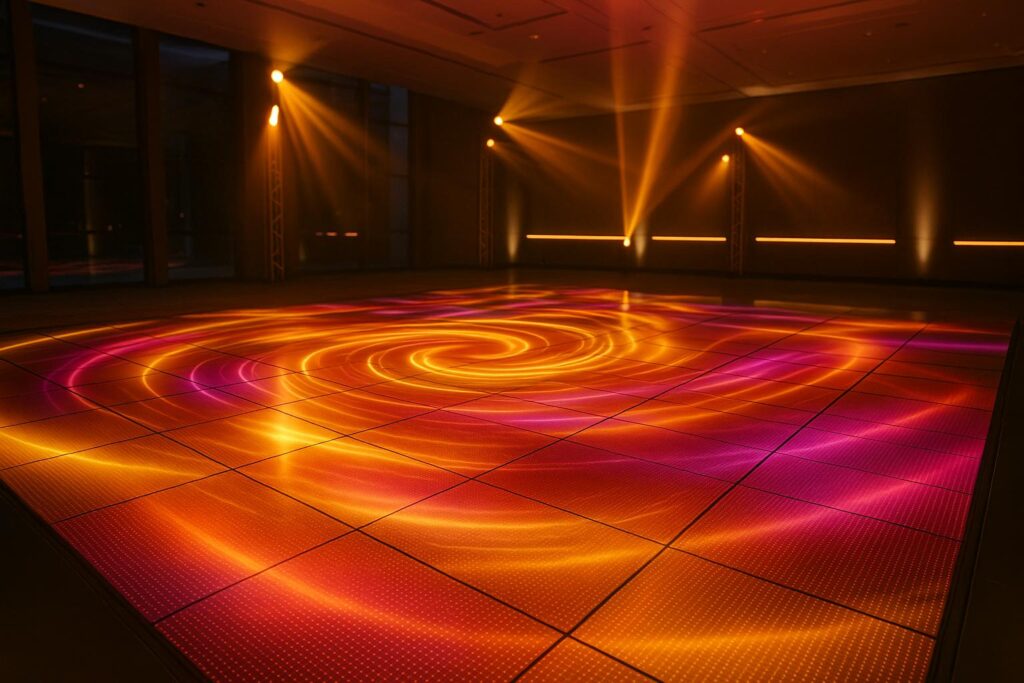
LED dance floors, when paired with integrated lighting systems, transform event spaces into interactive and visually captivating environments. By synchronising lighting with music and movement, these systems create dynamic experiences tailored to the event’s mood – whether it’s a wedding, corporate event, or entertainment venue. Key features include:
- Customisation: Colours, patterns, and logos can align with themes or branding.
- Interactive Features: Pressure-sensitive sensors allow floors to respond to movement.
- Control Options: DMX systems, remote controls, and software enable precise lighting coordination.
- Practical Design: Modular panels and wireless setups simplify installation and adapt to different venues.
- Durability: IP65-rated waterproof designs suit both indoor and outdoor events in Australia.
LED dance floors don’t just provide a functional surface – they become a centrepiece that engages guests, enhances ambience, and ensures memorable experiences. From soft hues for romantic weddings to bold displays in nightclubs, these systems elevate any occasion.
Interactive LED Dance Floor – From Start to Finish
Technical Foundations: How LED Dance Floors Work
LED dance floors combine advanced hardware and intuitive software to create captivating, responsive visual displays. Let’s explore the essential components and technical features that make these systems so effective.
Key Components and Features of LED Dance Floors
LED dance floors rely on a network of interconnected parts to deliver vibrant visuals and seamless functionality.
LED panels are the heart of the system, forming the visible surface. These panels are packed with tiny light-emitting diodes, and their density determines the clarity of the display – higher density means sharper images and more detailed effects. Today’s panels can produce up to 65,536 grayscale levels, ensuring smooth transitions and precise colour rendering. With 140-degree horizontal and vertical viewing angles, the display looks equally impressive no matter where the audience is positioned.
The panels are built for durability and clarity. An ABS base supports the structure, while tempered glass on top allows light to shine through without distortion. This construction is tough enough to handle constant foot traffic while maintaining optical transparency. Designed to comply with Australian standards, these floors perform reliably in all kinds of weather. The IP65 waterproof rating protects the internal electronics from moisture and dust, making them suitable for both indoor and outdoor events in Australia.
Control systems are the brain of the operation, managing the visuals through a mix of hardware and software. These systems take input from sources like music, pre-programmed sequences, or sensors, and convert it into LED instructions. They offer flexible control options, including remote controls (with a range of up to 50 metres), DMX controllers, computer software, and even iPad interfaces.
Power supply systems ensure that every LED receives stable energy. A reliable power supply prevents flickering or dimming, which could disrupt the display.
The panels connect in two main ways. Wired LED dance floors use power cords and are ideal for permanent installations in venues like nightclubs or hotel banquet halls. On the other hand, magnetic LED dance floors feature automatic magnetic connections that snap into place, ensuring a secure fit. This design is perfect for event rentals, concerts, and exhibitions where quick setup and reconfiguration are essential. Magnetic systems often come with rechargeable flight cases for easy transport and storage.
To guarantee consistent performance, strict quality checks are applied. Automated production processes, such as die bonding and wire bonding, ensure electrical stability. LEDs are rigorously tested and sorted to meet high standards, ensuring that only top-quality components make it into the final product. These measures ensure the floors deliver a reliable and immersive experience for every event.
Interactive Versus Display-Only Dance Floors
The key difference between interactive and display-only LED dance floors lies in how they respond to their environment and users.
Interactive LED dance floors use sensors to detect movement and respond in real time. Pressure and infrared sensors trigger visual effects as people move across the floor. This data is processed instantly, creating a dynamic experience where the floor reacts to every step. These floors can display solid colours like red, blue, yellow, and green to set different moods, or use Mix RGB effects to create vibrant blends and transitions. This interactive element turns the dance floor into an active participant, enhancing the energy of any event.
Display-only systems, on the other hand, focus on pre-programmed lighting sequences. These floors don’t respond to movement but instead run synchronised light shows set to music. Their carefully choreographed effects deliver a polished visual experience without the need for real-time interaction.
Here’s a quick comparison of the two:
| Feature | Interactive Floors | Display-Only Floors |
|---|---|---|
| Sensor Technology | Includes pressure and infrared sensors | No sensors |
| User Response | Real-time feedback to movement | Pre-programmed sequences only |
| Visual Effects | Dynamic, interactive patterns | Choreographed, consistent displays |
| Best Applications | Events focused on audience engagement | Professional, polished presentations |
| Setup Complexity | Requires sensor calibration | Easier installation |
Both types of floors allow for extensive customisation, including logos, specific colour schemes, and tailored lighting effects to suit any venue or event. The choice between the two depends on the event’s goals. Interactive floors shine at events where audience participation is key – like weddings or entertainment venues where energy and engagement are paramount. Display-only floors are better suited for corporate events or venues where a sleek, professional look is the priority.
Both systems feature modular designs, ensuring seamless displays that can be scaled to fit any space.
Integrating Lighting Systems with LED Dance Floors
Pairing LED dance floors with venue lighting systems can create a seamless and immersive visual experience. The trick is understanding how different control technologies work together to synchronise every lighting element in your event space.
Using DMX Control for Synchronisation
DMX (Digital Multiplex) control is the go-to standard for managing intricate lighting setups at Australian events. Acting as a central communication hub, DMX allows LED dance floors and other lighting fixtures to respond in unison to music, themes, or pre-programmed sequences.
With the ability to control up to 512 channels, DMX provides precise operation across hundreds of fixtures and zones. For venues hosting weddings, corporate events, or entertainment nights, this system simplifies operations by eliminating the need for multiple operators managing separate setups.
Here’s how it works: DMX controllers interpret audio inputs and programmed commands, converting them into specific lighting instructions. For example, the system can analyse audio frequencies in real time, triggering effects that sync perfectly with bass drops, rhythm shifts, or vocal highlights. The result? A cohesive visual performance where ceiling lights, wall fixtures, and floor panels move in perfect harmony.
While professional installation and proper cabling are necessary, the payoff is reliability and precision. DMX-controlled systems shine at high-end events where timing is critical – like choreographed first dances at weddings or product launches where lighting needs to align perfectly with presentations.
For venues looking to integrate extensive lighting systems, DMX offers unmatched control. Operators can customise complex colour transitions to match a company’s branding or create soft, romantic tones for weddings, all while ensuring every element is perfectly synchronised.
Though DMX excels in permanent setups, wireless technology brings the flexibility needed for temporary events.
Wireless Lighting and Plug-and-Play Flexibility
Switching to wireless methods can simplify installation and add flexibility. Wireless LED dance floors, for instance, eliminate the need for extensive cabling while maintaining reliable communication with other lighting systems.
These systems are easy to set up, with panels that securely snap together using interlocking designs. This quick assembly makes wireless options ideal for mobile event companies or venues that require adaptable configurations. Remote controls with ranges up to 50 metres allow operators to adjust effects instantly, whether they’re managing a backyard wedding or a large corporate gala.
Wireless systems integrate with existing venue lighting using wireless DMX receivers or Bluetooth protocols, ensuring synchronisation without the hassle of physical wiring.
For Australian event planners, the choice between DMX and wireless systems often depends on the venue’s needs. Permanent installations, such as those in nightclubs or hotel ballrooms, benefit from DMX’s precision and reliability. On the other hand, temporary events lean towards wireless options for their quick setup and adaptability.
Many venues are now opting for hybrid systems, combining wireless dance floors with DMX-controlled lighting. This approach offers the best of both worlds: the convenience of quick dance floor installation alongside the precision of synchronised ambient lighting. For example, companies like One Click Events in Melbourne use wireless LED dance floors alongside their DJ services, ensuring smooth audio-visual integration while remaining flexible enough to adapt to various venues.
No matter the method, ensuring adequate power supply is critical. Both the dance floor and supplementary lighting require sufficient electrical capacity to prevent flickering or dimming. Wireless systems often include built-in surge protection to maintain consistent performance.
For temporary setups, rail installation provides another practical option. This involves placing alignment rails on-site – no tools required. The rails protect circuit connections and adapt to uneven surfaces, making them particularly useful for outdoor Australian events where the ground may not be perfectly level. These features ensure that integrated systems consistently deliver the dynamic effects that LED dance floors are known for.
When choosing a control system, consider the event’s needs and your technical expertise. Remote controls work well for smaller events where mobility is key. For more advanced customisation, computer software interfaces allow for tailored effects and video integration. DMX remains the top choice for large-scale events requiring precise control across multiple zones. Whether you go with DMX, wireless, or a hybrid setup, the right integration ensures a perfectly synchronised audio-visual experience at every event.
sbb-itb-9167268
Event Applications: Transforming Spaces with LED Dance Floors
LED dance floors are a game-changer for events, offering customisable experiences tailored to different occasions. Whether it’s an intimate wedding or a high-energy nightclub, these floors bring a dynamic, interactive element that can be adapted to suit the mood and purpose of the event.
Weddings: Creating Memorable Moments
At weddings, LED dance floors add a touch of magic, blending seamlessly with the romantic atmosphere. A key consideration is colour coordination – matching the floor’s hues to the wedding’s palette ensures it feels like a natural part of the décor. Soft, starlit effects and warm tones enhance the intimate setting during dinner, while brighter, more vibrant colours energise the dance floor as the night unfolds.
Customisation options, like displaying the couple’s initials or wedding-themed patterns, elevate the experience further. The technology’s interactivity – using pressure-sensitive sensors – creates playful effects as guests dance, changing colours or triggering patterns in real time. This not only makes for unforgettable photo opportunities but also encourages even the shyest guests to join in.
To ensure a smooth setup, event planners should work closely with venue staff well in advance. Modern LED systems are modular, meaning they can adapt to various layouts, whether it’s a hotel ballroom or an outdoor marquee. When paired with complementary lighting and décor, these dance floors enhance the overall ambience without overpowering the space.
Corporate Events: Branding and Professionalism
For corporate events, LED dance floors double as branding tools. By combining projection mapping with floor lighting, companies can showcase logos, brand colours, or promotional content directly on the surface. These floors also support video integration, making them ideal for product launches or marketing campaigns.
During formal segments, floors can display subtle, professional lighting schemes. Later, dynamic effects can energise networking sessions or social activities. By cycling through brand-specific colours, the event maintains a cohesive visual identity. Operators can synchronise lighting effects with presentations or performances using DMX controllers or software, ensuring a polished and professional atmosphere.
Entertainment Venues: Engaging Audiences
In nightclubs and live entertainment spaces, LED dance floors take audience engagement to the next level. These floors create immersive, synchronised light shows that amplify the energy of the crowd. Operators can control lighting sequences in real time using DMX controllers, remote controls, or software, allowing effects to match the tempo and mood of the music.
Wireless control systems, with ranges up to 50 metres, give operators the freedom to adjust effects from anywhere in the venue. This flexibility is particularly useful in larger spaces, where monitoring the crowd’s energy from multiple vantage points ensures the lighting remains impactful.
To create a fully immersive experience, venues often integrate the dance floor with overhead and wall-mounted lighting. This approach transforms the entire space into a cohesive light show rather than isolating the floor as a standalone feature.
The modular design of systems like OPPSK – made up of 256 individual 1×1 foot LED panels – offers scalability. Whether it’s a small dance area or a massive 16×16 metre floor, venues can tailor the setup to suit the crowd size and event type. This adaptability makes LED floors a smart investment, as they can be reconfigured for various events.
Premium LED fixtures, which include features like RGBAW+UV colour mixing and wireless DMX control, typically cost between AUD $400–$530 per fixture. These units are lightweight, battery-operated for up to 10 hours, and IP65-rated, making them suitable for both indoor and outdoor use. For entertainment venues, these systems not only enhance guest experiences but also justify premium rental rates and extended dance floor usage, delivering a solid return on investment.
Practical Setup and Maintenance Tips
Setting up an LED dance floor with integrated lighting requires careful planning and attention to detail. A proper installation process ensures not only smooth performance but also durability and safety for guests.
Efficient Installation Methods
When it comes to LED dance floors, the first step to a successful installation is preparing the subfloor. The surface must be clean, level, and sturdy enough to support the weight of the tiles, dancers, and any additional equipment.
There are three main installation methods for LED dance floors, each offering unique benefits:
- Traditional wired method: This approach uses cables to connect each tile to the power supply and controller. While it provides reliable performance, it requires more time due to the complexity of managing cables.
- Wireless interlocking system: By connecting tiles through metal tabs, this method eliminates most cabling, making setup and breakdown significantly faster.
- Magnetic installation method: The most advanced option, this system uses integrated magnets and clips for quick assembly, cutting setup time in half and making it ideal for rental setups.
The time required for installation depends on the dance floor’s size and complexity, ranging from a few hours to an entire day. Following the manufacturer’s instructions is key – this includes preparing all tiles, connecting the power supply and controller, and ensuring modular configurations align with the desired layout. Modular tiles offer flexibility, allowing you to incorporate logos, brand colours, or interactive elements while maintaining a polished look. For outdoor or uneven surfaces, rail-based systems provide extra protection for the circuit connections.
Once the dance floor is assembled, thorough testing is a must. Check every LED panel to confirm they’re functioning properly, and calibrate the control system for accurate responses, particularly for interactive floors with pressure-sensitive technology.
Securing all electrical connections and conducting regular maintenance will keep the system running smoothly over time.
Ensuring Durability and Safety
Durability and safety are non-negotiable when it comes to LED dance floors. All electrical connections should meet Australian safety standards, and wiring must be routed away from high-traffic areas to avoid tripping hazards. The surface itself should offer enough grip to reduce the risk of slipping. Regular inspections can help identify cracks or damage early, preventing potential electrical issues.
Protective measures during installation also play a significant role in extending the floor’s lifespan. Applying waterproof treatments and protective coatings can shield the floor from moisture and environmental factors, especially in humid Australian venues. Additionally, the transparent or semi-transparent surface layers should be strong enough to handle the impact of dancing while still allowing the LED lights to shine through effectively.
Post-event care is just as important. Clean the floor with a soft, damp cloth to remove dust without harming the LED panels. Routine checks of tiles, connectors, and wiring can catch wear and tear early, and keeping the control system updated ensures consistent performance. Proper storage is crucial too – tiles should be stored in a dry, temperature-controlled area. For transport, wrap each tile individually or use protective cases, and store cables and connectors separately to avoid damage. Australian venues, in particular, should protect equipment from prolonged heat or humidity exposure. Regular inventory checks can also help identify any components that need repairs or replacements before the next event.
Professional installation ensures seamless panel alignment, creating a flawless display without gaps that could disrupt the visual effect. Brightness settings should be tested regularly to maintain the desired ambience, and remote control systems – operable within a 50-metre range – should be checked for consistent signal strength throughout the venue.
For tailored installation and maintenance services, Melbourne-based One Click Events offers solutions to keep your LED dance floor in top shape.
Conclusion
Pairing lighting systems with LED dance floors can completely transform an event space into a vibrant, interactive environment that leaves a lasting impression on guests. With synchronised colour-changing effects, interactive features that respond to movement, and the ability to customise the atmosphere to match any theme or brand, these setups bring a new level of creativity and engagement to events.
LED dance floors with integrated lighting adapt seamlessly to different occasions. Imagine a wedding where personalised colours and effects create a romantic mood, a corporate event where logos and brand colours shine through, or a nightclub where every step becomes part of the entertainment thanks to pressure-sensitive sensors. These floors don’t just enhance the visual appeal – they become the centrepiece that draws people in and gets them involved.
Modern control systems, like DMX controllers and wireless plug-and-play options, make it easier than ever for event planners to tailor the setup to suit specific venues and themes. In Melbourne, companies like One Click Events offer expert services that combine LED dance floors with professional lighting and audio-visual design. Their all-in-one packages simplify the planning process for weddings, corporate events, and other celebrations, ensuring a polished and cohesive experience.
Looking ahead, advancements like augmented reality features, improved motion sensors, and eco-conscious designs are set to take LED dance floors to the next level. By staying on top of these trends, event planners can deliver unforgettable experiences that not only meet but exceed guest expectations.
FAQs
How do LED dance floors with integrated lighting create a more engaging event experience?
LED dance floors with built-in lighting bring an energetic and eye-catching feature to any event. By syncing vibrant light displays with music or themed elements, they grab attention and inspire guests to hit the dance floor. The colourful visuals don’t just uplift the mood – they create unforgettable moments that stick with everyone long after the event ends.
These interactive floors are a standout choice for weddings, corporate functions, and parties, where a lively atmosphere is a must. With adjustable lighting effects, you can customise the display to perfectly align with your event’s theme or branding, making it a truly memorable experience.
How does DMX control enhance lighting synchronisation on LED dance floors?
DMX control systems bring precision and flair to LED dance floors, ensuring the lighting flows perfectly with the music and mood of an event. These systems allow for real-time adjustments, creating smooth transitions and eye-catching effects that elevate the overall atmosphere.
What makes DMX stand out is its ability to synchronise multiple lighting elements seamlessly. This opens up endless creative options, making it a go-to choice for events like weddings, parties, and corporate gatherings where high-quality, immersive lighting is a must. For a hassle-free setup and a truly memorable event, teaming up with professionals like One Click Events – who specialise in customised event solutions – can make all the difference.
What should you consider when setting up LED dance floors for outdoor events in Australia?
When organising LED dance floors for outdoor events, it’s essential to account for the specific challenges that come with being outside. Start by making sure the ground is level and sturdy enough to securely support the dance floor. Weather is another big consideration – choose equipment designed to handle the elements, and think about adding protective covers or marquees to guard against rain or intense sunlight.
Power is another critical aspect. Confirm that there are dependable power sources on-site, or arrange for generators if necessary. If you’re hosting the event in Australia, be sure to follow local safety regulations and standards to keep everything compliant. With careful preparation, you can create a safe and visually impressive experience for your guests.