
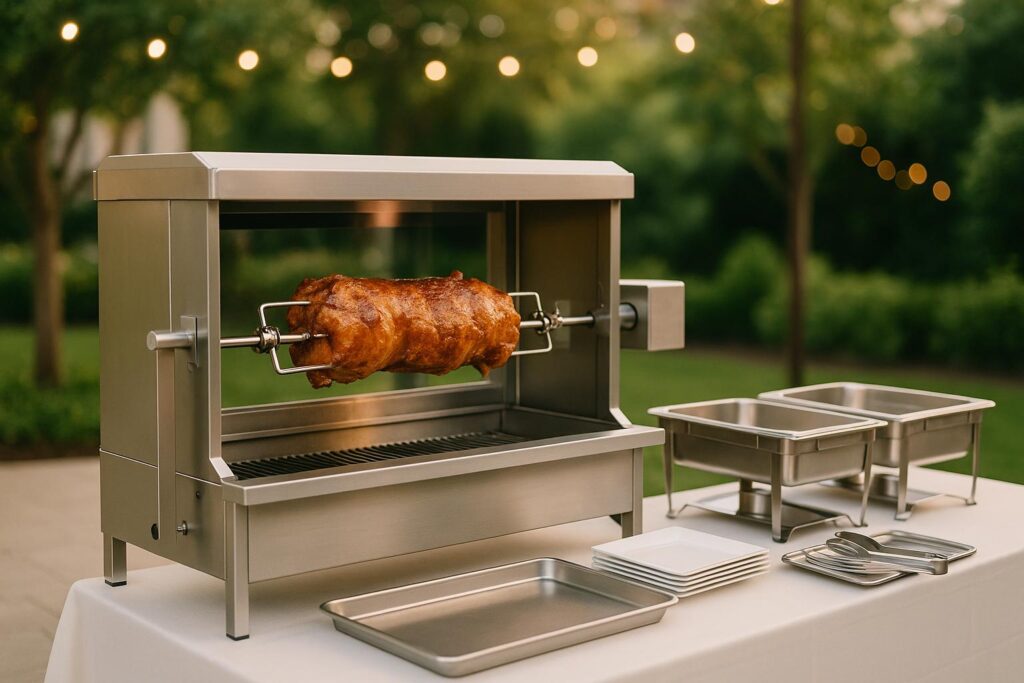
Organising a rotisserie for your event can be straightforward if you follow a clear checklist. Here’s what you need to know:
- Capacity Planning: Choose the right size based on guest numbers. For example, a 50-person event may need 12–17 birds, while 100 guests might require 25–33.
- Fuel Type: Electric rotisseries are ideal for indoor venues, while gas-powered ones suit outdoor events with higher heat needs.
- Delivery & Setup: Schedule delivery 2–4 hours before your event and ensure clear access and a stable setup area.
- Safety & Compliance: Ensure equipment meets Australian safety standards (AS/NZS). For gas, check LPG storage rules.
- Accessories: Confirm essential tools like thermometers, carving knives, and drip trays are included.
- Costs: Expect rental fees between $150–$500 AUD per day, with additional charges for delivery, fuel, and cleaning.
Equipment Specifications to Check
When selecting rotisserie equipment, it’s crucial to consider the technical specifications that align with your event’s needs. These details influence everything from how many guests you can serve to how the equipment fits into your venue’s layout. Here’s what to focus on.
Size and Capacity
Rotisserie sizes and capacities vary widely, from compact countertop units that cook 8–12 birds to larger commercial models capable of handling 30–40 birds at once. The right choice depends on the number of guests and how you plan to serve the food.
As a general guideline, plan for one bird per 3–4 guests (or 5–6 guests if you’re offering multiple protein options). For example:
- A 50-person event may require 12–17 birds.
- A 100-person event could need 25–33 birds.
Countertop rotisseries, typically 60–90 cm wide, are ideal for smaller gatherings of 20–40 people. For larger events with over 100 guests, commercial units ranging from 120–180 cm in width are more suitable, though they will require dedicated floor space.
Your service style is another factor to consider. If you’re serving food as it becomes ready (continuous service), smaller batches cooked throughout the event may suffice. For plated service – where everyone eats at the same time – you’ll need enough capacity to prepare all the food within a 30–45 minute window. This may require multiple rotisseries or a high-capacity commercial model.
Additionally, ensure you have adequate workspace. Countertop models need around 1.5–2 m², while commercial units require 3–4 m², with at least 1 metre of clearance on all sides.
Fuel Type Options
Rotisseries can run on either electricity or gas, and each has its own advantages depending on your event setup.
Electric Rotisseries
These units operate on 208–240 volts, which is standard in Australia, and provide consistent, easily controlled heat. They’re great for indoor venues or places where storing fuel is restricted. Electric models produce less smoke, making them suitable for enclosed spaces with proper ventilation. Just make sure your venue has 240-volt outlets available.
Gas-Powered Rotisseries
Gas units use LPG (liquefied petroleum gas) and offer higher heat output with more portability. They’re ideal for outdoor events or larger gatherings where you need maximum cooking power. Gas models typically consume 1–2 kg of LPG per hour. For a 4-hour event, you’ll need at least one 9 kg cylinder; for longer events, consider two 19 kg cylinders.
When using gas, safety is key:
- Store cylinders upright, away from high-traffic areas, and at least 3 metres from ignition sources.
- Check if your venue allows LPG storage and has space for safe cylinder placement.
- Keep in mind that colder weather can increase gas consumption, so plan accordingly.
Ensure the gas rotisserie meets AS/NZS standards and comes with the required safety documentation. Also, confirm whether the hire includes gas cylinders or if you’ll need to arrange them separately.
Cooking Features
Beyond size and fuel type, certain features can improve the rotisserie’s performance and versatility.
Look for models with:
- Multi-zone cooking for different heat levels.
- Additional grill surfaces and basket accessories for menu variety.
- Adjustable height settings and warming shelves to maintain food quality and safety.
Warming shelves are especially important for keeping food at safe serving temperatures (above 60°C) while you prepare fresh batches. Without this feature, you’ll need separate warming equipment to avoid serving food at unsafe temperatures.
Check if the rotisserie includes adjustable forks, drip trays, and heat deflectors for efficient and consistent cooking. A built-in thermometer or compatibility with external probe thermometers is also essential for maintaining safe cooking temperatures, generally between 180–200°C.
Finally, ask which accessories are included with the hire and which may cost extra. A standard package should come with spare spits (2–3), adjustable forks, drip trays, and basic utensils. Specialty attachments might incur additional charges but can be worth it if they eliminate the need for extra equipment.
Pre-Hire Logistics Checklist
Sorting out the logistics before your rotisserie arrives can make all the difference between a seamless event and unnecessary stress. It’s important to confirm delivery details, check your venue’s setup, and clarify responsibilities for safety and maintenance.
Delivery and Setup Requirements
Schedule a delivery window of 2–4 hours and designate someone to receive the equipment. If your event falls during peak seasons – October to December for summer events or April to May for autumn gatherings – book your rotisserie hire 4–8 weeks in advance. For quieter periods, 2–4 weeks’ notice is usually fine, but larger events with over 100 guests or multiple pieces of equipment may require 8–12 weeks of planning.
Ensure delivery goes smoothly by clearing all obstacles and confirming that pathways are at least 1.2 metres wide. For tight spaces, like narrow doorways or sharp corners, measure carefully and consider temporarily removing doors if necessary.
Check that the ground where the rotisserie will be set up is level and stable. If you’re hosting an outdoor event on grass or soft surfaces, arrange for temporary flooring or reinforcement to keep the equipment from sinking or tilting. Indoors, confirm that the floors can handle the weight of commercial rotisserie equipment to avoid damage.
Ask the hire company what their setup service includes. Will they position the equipment and perform initial testing, or will you need extra hands for this? Delivery and basic setup typically take 30–60 minutes, so make sure this is outlined in your agreement.
For electric rotisseries, confirm the venue has sufficient power – most commercial models need 15–20 amp circuits. If you’re using a gas-powered rotisserie, check whether the hire company supplies LPG cylinders or if your venue has fixed gas connections. Also, ensure your venue permits LPG storage and has a safe area for cylinder placement, at least 3 metres from ignition sources.
Position the rotisserie with 2–3 metres of clearance from buildings, marquees, and anything flammable, like decorations or tablecloths. This spacing is essential for safety and accessibility. If your event is outdoors, consider whether wind protection or a temporary shelter is needed, as wind can disrupt gas burners.
Finally, confirm the timeline for equipment collection after the event. Clarify whether the hire company handles breakdown and if someone needs to be on-site at a specific time.
Once these logistics are squared away, turn your attention to safety and compliance.
Safety and Compliance
Meeting Australian safety standards is non-negotiable to protect your guests and avoid liability. All gas-powered rotisseries should comply with AS/NZS 4601, and electric models must meet the relevant electrical standards. Always request certification documents before signing the hire agreement.
For gas-powered units, ensure proper certification for LPG cylinders and confirm they are stored safely, following Australian Dangerous Goods regulations. Cylinders should be upright, kept away from heat sources, and stored in a well-ventilated area. Keep written fuel safety procedures handy.
Electric rotisseries must adhere to AS/NZS 3000 (Australian/New Zealand Wiring Rules). Proper ventilation is also critical to prevent carbon monoxide buildup, especially in enclosed or semi-enclosed spaces.
Food safety is just as important. Rotisseries should be capable of maintaining safe food temperatures (above 60°C for hot holding) and designed to prevent cross-contamination. Ask the hire company if they provide operator training, including emergency protocols, fuel leak handling, and proper shutdown procedures.
Check the hire company’s insurance coverage. Reliable providers typically carry public liability insurance ranging from AUD $10–20 million. Request proof of this coverage and ensure it’s up to date. Also, review your own event liability insurance to confirm it covers rotisserie use, as some policies may exclude specific cooking equipment.
If your event is in a public space like a park or council-managed facility, contact your local council to see if a temporary food service permit is needed. Some councils require permits or notifications for outdoor cooking equipment, especially in residential areas. Review your venue’s agreement for any restrictions on fuel types, placement, or operating hours, and get written confirmation that rotisserie use is allowed. Keep all permits or approvals on hand during the event.
Once safety and compliance are addressed, turn your focus to maintenance and cleaning.
Maintenance and Cleaning
Make sure cleaning and maintenance responsibilities are clearly stated in your hire agreement. Typically, you’ll handle light cleaning during the event, while the hire company will take care of deep cleaning afterward.
Check whether cleaning supplies – like heat-resistant gloves, long-handled brushes, and grease-safe cleaning solutions – are provided, or if you’ll need to bring your own. To avoid extra fees, assign someone to perform light cleaning during the event and do a final wipe-down before the equipment is picked up.
Understand the damage policy in your agreement. While normal wear and tear is usually covered, significant damage – like dents, broken parts, or misuse – could result in repair costs ranging from AUD $200 to over $1,000. Take photos of the equipment when it arrives and note any existing issues on the paperwork to protect yourself from being charged for pre-existing damage.
Discuss how to report malfunctions. The hire company should handle repairs or technical issues, but confirm their response time for emergencies. Get an emergency contact number and check if they offer on-site support or replacement equipment, especially for weekend or after-hours events.
Keep maintenance schedules and user manuals accessible during the event. These should be provided along with safety certifications at delivery. If you’re operating the rotisserie yourself, make sure you’re familiar with maintenance tasks like checking fuel connections, monitoring temperature gauges, and knowing when to shut the equipment down if something goes wrong.
Accessories and Additional Items to Include
To keep your event running smoothly, make sure you’re equipped with all the necessary accessories – everything from cooking tools to safety supplies and setup essentials.
Cooking Tools and Supplies
When it comes to food preparation, having the right tools is non-negotiable. Start with meat thermometers – both instant-read and probe types – to ensure your food is cooked to safe internal temperatures. For instance, poultry should hit 75°C, while beef needs to reach 63°C. Keep temperature logs or recording sheets handy to document this information for compliance purposes.
Long-handled tongs and forks are essential for handling hot food safely, and basting brushes are a must for adding marinades during cooking. Sharp carving knives make portioning a breeze, and sturdy roasting pans or drip trays catch juices and minimise mess. While these are often included with rotisserie rentals, it’s worth double-checking with your hire company.
Other essentials include skewers or rotisserie rods (depending on your equipment), cutting boards for prep work, and serving utensils like spoons and tongs. Stock multiple sets of these items so you can rotate them during washing without disrupting service. Colour-coded chopping boards are a smart addition to prevent cross-contamination between raw and cooked foods.
For food storage, insulated containers are invaluable for keeping ingredients at the right temperature before and after cooking. If refrigeration isn’t available at your venue, pack ice packs or portable cooling units. Clear labelling for raw and cooked foods is another simple but effective way to avoid mix-ups.
Safety and Sanitation Items
Safety is paramount, so position essential equipment within easy reach of the cooking area. Fire extinguishers rated for grease fires (Class B or K) and a fully stocked first aid kit should be on hand. Clearly marked safety signs can help manage high-traffic areas.
Slip-resistant mats around the cooking station reduce the risk of accidents, especially if spills occur. Wet-floor signs should be ready to mark hazards promptly. Heat-resistant gloves in multiple sizes are another must-have for staff handling hot equipment.
Maintain hygiene with proper sanitation supplies. Set up buckets with food-safe sanitiser and have plenty of disposable paper or cloth towels for cleaning surfaces. Use separate cleaning supplies for equipment and food prep areas to avoid cross-contamination.
If your event is in a remote location without plumbing, portable handwashing stations are essential. Hand sanitiser stations should also be placed near the cooking area to encourage regular use.
Waste management is another key consideration. Stock plenty of rubbish bags and set up separate bins for organic waste (like meat scraps), recyclables, and general rubbish. Biodegradable waste containers are a great option for eco-conscious events. Additionally, grease traps or collection containers are crucial for managing drippings – never dispose of hot grease down drains, as this can cause plumbing and environmental issues.
Disposable gloves, aprons, and hairnets for food handlers are simple yet effective ways to maintain high hygiene standards.
Additional Event Setup Needs
Your rotisserie setup needs the right infrastructure to function efficiently. Portable tables are essential – ideally, one for food prep and another for serving. This creates a smooth workflow from cooking to plating.
For outdoor events, consider a 3m × 3m marquee or umbrella to shield equipment and staff from the elements. Make sure it’s properly anchored to withstand wind.
If your venue lacks sufficient power, a generator is a must. Use heavy-duty, outdoor-rated extension cords (minimum 2.5mm² cable) to handle the load safely. Always have a backup power source – whether it’s an extra gas bottle or a portable generator – to avoid interruptions. Fuel gauges or monitoring tools can help you keep track of consumption.
Lighting is critical for evening events. Equip your team with LED work lights or portable floodlights to ensure both the cooking and serving areas are well-lit after dark.
Weather protection is another consideration. Use weatherproof covers for your equipment during setup and breakdown, tarps to protect fuel supplies, and windbreaks for exposed venues. For cooler Australian nights, portable heaters can keep staff comfortable, while additional shade structures are helpful during summer events.
To enhance the dining experience, include serving accessories like chafing dishes or heated trays to keep food warm. Serving platters, bowls, and napkins are essential for presentation, while sneeze guards or food covers are ideal for buffet-style setups to maintain hygiene.
Lastly, ensure your hire package includes all necessary paperwork. This should include food safety certificates, insurance details, equipment maintenance records, and safety instructions. Keep copies of inspection certificates for any gas or electrical equipment, as well as emergency contact information and incident report forms, readily accessible throughout the event.
sbb-itb-9167268
Event-Day Operations
Delivering consistent performance during service is key to a successful event. Proper monitoring and management not only ensure food safety but also help prevent equipment issues and keep your guests happy.
Temperature and Food Safety
Keeping food at the right temperature is critical. According to Australia’s Food Standards Code, hot food must be maintained at 60°C or above to prevent bacterial growth and foodborne illnesses. Food should not remain in the danger zone of 5–60°C for more than two hours.
Use calibrated thermometers to check food temperatures every 30 minutes. Digital probe thermometers are especially handy as they provide quick readings without removing food from the rotisserie. Record these checks to ensure compliance with the Food Standards Code.
Position your rotisserie in a wind-protected area, as strong breezes can lower cooking temperatures and compromise food safety. If food falls below 60°C, it must either be reheated immediately or discarded. To minimise heat loss when transferring food, coordinate with warming equipment like steam tables, hot food cabinets, or chafing dishes placed within 2–3 metres of the rotisserie. Insulated serving trays and covers are also useful for retaining heat. For events lasting over two hours, renting a commercial holding cabinet may be a smart option to keep food at a consistent temperature. Keep ice storage or cooling stations at least 3 metres away to prevent temperature interference.
Once food temperatures are under control, turn your attention to ensuring fuel and power reliability.
Fuel and Power Management
Running out of fuel mid-service is a preventable disaster. Always have a backup gas cylinder on hand, ensuring it’s at least 50% full. Develop a clear system for swapping cylinders seamlessly during service.
Before the event, inspect all fuel connections and regulators. If you spot leaks or irregularities, call a qualified technician to address the issue immediately. Store fuel away from food prep areas and follow local fire safety guidelines. For events lasting over four hours, plan for at least one fuel change during a natural service lull.
For charcoal rotisseries, stock up on 1.5 times the estimated charcoal needed. High-quality charcoal burns more consistently and delivers better cooking results. Store extra charcoal in a dry area to maintain its efficiency.
With fuel and power secured, focus on managing food rotation for consistent quality.
Food Handling and Rotation
During service, active food rotation is essential to maintain even cooking. Reposition food every 15–20 minutes to ensure uniform heat exposure. Leave 5–10 cm of space between items to allow proper heat circulation.
Place heavier items on the lower racks of the rotisserie, as they benefit from higher heat, while lighter items should go higher to avoid overcooking. When cooking mixed meats, keep chicken separate from red meats to prevent cross-contamination and account for their different cooking times. Use a "first in, first out" approach to serve older batches first. Assign a staff member to monitor rotation and temperature checks, recording each rotation on a checklist. Ensure easy access to all sides of the rotisserie without reaching over hot surfaces.
Keep the rotisserie clear of overhead structures or decorations to allow safe movement around the equipment. Establish communication between the rotisserie operator and serving staff using two-way radios, hand signals, or visual cues (like flags or lights) to indicate when food is ready for service. Conduct a pre-event briefing to ensure everyone understands serving protocols, portion sizes, and any special dietary requirements.
Use a tracking system, such as colour-coded tags or a whiteboard, to indicate when each batch will be ready. This helps the front-of-house team manage guest expectations and align timings with other food stations. In case demand exceeds supply, have a backup plan, such as pre-cooked items stored in warming equipment or additional rotisserie capacity.
Throughout the event, keep detailed records, including start and end times for rotisserie operation, fuel usage, temperature logs, and any incidents or equipment malfunctions. Document the amount of food prepared and served, as this information is invaluable for future planning and waste reduction. Retain all records for at least 12 months to comply with local health regulations or for insurance purposes.
Costs and Rental Terms
Once you’ve sorted out the logistics, it’s time to dive into the details of pricing and rental agreements. Understanding the costs and terms upfront ensures smooth budgeting and helps you avoid unexpected expenses.
Pricing and Fees
In Australia, renting a rotisserie typically costs $150–$400 AUD per day for standard commercial-grade models. The price depends on the size and capacity of the equipment. Smaller, portable rotisseries designed for 20–50 guests range from $150–$250 AUD per day, while larger units capable of serving over 100 guests can cost $350–$500 AUD daily.
Rental companies often adjust their pricing based on the duration and timing of the booking. Daily rates are higher than weekly rentals, and weekend bookings generally include a 15–25% surcharge. To save money, consider package deals that combine equipment rental with delivery, setup, and cleaning services. These bundles can reduce overall costs by 10–20% compared to booking each service separately.
Fuel expenses are an additional cost, ranging from $20–$60 AUD depending on the type of fuel and the event’s duration. For gas-powered rotisseries, a full tank costs $30–$50 AUD, lasting 6–8 hours of continuous use. Charcoal is slightly cheaper, at $20–$40 AUD per event. Always confirm whether fuel is included in the quoted price or if it’s charged separately.
Delivery and setup fees vary based on location and complexity. In cities like Melbourne, delivery fees typically range from $50–$80 AUD, while regional or remote areas may cost $100–$150 AUD or more. Setup fees cover positioning the equipment, connecting utilities (like gas or electricity), and conducting basic safety checks. Some companies waive delivery fees for rentals exceeding $300 AUD or for multi-day bookings.
Cleaning fees depend on the level of service. Basic cleaning – removing food residue and light sanitisation – is often included in the rental price. However, deep cleaning or degreasing may incur an additional $50–$100 AUD. For rentals extending beyond the agreed period, overage fees of $15–$25 AUD per hour are common.
Seasonal demand affects pricing. During peak months (October–December), prices can increase by 20–40%, while off-peak periods (June–August) often come with 15–25% discounts. Booking in advance – at least eight weeks ahead – can secure further discounts of 10–15%.
To avoid surprises, always request an itemised quote. This breakdown should clearly list the costs for equipment rental, delivery, setup, fuel, and any additional services. Confirm whether the quoted price includes GST (10% in Australia) to ensure accurate budgeting.
Insurance and Damage Policies
Most hire companies require a security deposit of 20–30% of the rental cost, refundable upon returning the equipment in good condition. Rental agreements often include a damage liability clause, holding you responsible for any damage beyond normal wear and tear caused by misuse or neglect.
Insurance requirements vary. Some companies include basic damage coverage in their fees, while others expect you to arrange your own public liability insurance. For events, a minimum coverage of $10 million AUD is typically recommended. For high-value equipment or larger gatherings, you may need to provide proof of event insurance before finalising your booking.
It’s essential to clarify what counts as "normal wear and tear" versus chargeable damage. Request a written definition to avoid disputes later.
To protect yourself, document the equipment’s condition at the time of delivery. Ask for a pre-hire inspection report with photos, and take your own pictures or videos from all angles, noting any pre-existing damage. Repeat this process before returning the equipment. Most companies will provide a post-return inspection report to confirm its condition.
Equipment must usually be returned clean, with food residue removed and surfaces wiped down. Inspections will check for damage, fuel levels or charcoal use, and the return of all accessories. Late returns often incur daily charges of $30–$75 AUD.
Support and Maintenance Services
Most reputable hire companies offer 24-hour emergency support throughout the rental period. If issues like equipment malfunctions or fuel shortages arise, technicians are available for on-site troubleshooting at an additional cost of $50–$100 AUD per hour.
Warranty coverage typically applies to manufacturing defects and mechanical failures but excludes damage caused by misuse or operator error. For example, if a mechanical part breaks due to a defect, the company is responsible. However, you’ll be liable for damage from improper use.
To help prevent issues, companies often provide operational manuals and short training sessions (15–30 minutes) at no extra cost. This guidance ensures you can manage minor problems independently and reduces the risk of accidental damage.
For large events (150+ guests) or extended rentals (over eight hours), consider hiring on-site technician support. This service, costing $100–$200 AUD, ensures smooth operation by monitoring fuel levels, temperature, and equipment performance. It can save you from potential disruptions during your event.
Before your event, establish clear communication protocols. Confirm emergency contact numbers, response time expectations, and the process for reporting issues. Some companies guarantee technician arrival within two hours, while others may take longer, depending on location and availability.
Key terms to review in the contract include rental dates and times, equipment specifications, included services, pricing breakdown, payment terms, cancellation policies, liability and insurance requirements, damage procedures, and emergency protocols. Ensure the agreement specifies what happens if the equipment fails during your event – whether replacements are provided or refunds offered.
Cancellation policies generally allow full refunds for cancellations made 14–30 days in advance. Partial refunds (50–75%) apply for cancellations 7–14 days prior, while cancellations within seven days usually forfeit the full fee. Some companies may offer credits for future bookings. Weather-related cancellations are often handled on a case-by-case basis, with many companies offering free rescheduling or full refunds for postponements due to severe weather.
Finally, make sure all verbal agreements, special requests, or customisations are documented in writing. Check for hidden clauses, such as liability limitations or force majeure provisions, and request clarification on any ambiguous terms. Keep a signed copy of the contract and all correspondence for reference in case of disputes.
Conclusion
Renting a rotisserie doesn’t have to feel like a daunting task. By following a clear checklist – covering everything from equipment details and logistics to event-day operations and rental agreements – you can tackle potential challenges well in advance. This approach helps turn what could be a source of stress into a smooth and manageable process.
The foundation of a successful hire lies in careful preparation and open communication with your rental provider. Aim to start planning at least two to three weeks before your event. Use the checklist to confirm key details like delivery schedules, power requirements, food safety measures, and available support. For those looking for expert guidance, the team at One Click Events can assist in selecting and setting up the right rotisserie for your needs.
Make sure to get written confirmation of costs, insurance coverage, and cancellation policies. Additionally, verify that all equipment complies with Australian safety and food handling regulations.
To ensure everything runs smoothly, conduct a final review of your checklist 48 hours before the event. By systematically addressing every detail – capacity, fuel, cleaning, and support – you can feel confident that your event will go off without a hitch. With thoughtful planning, you’ll be well-prepared for a hassle-free and enjoyable experience.
FAQs
How do I choose the right size and capacity for a rotisserie to suit my guest numbers?
When choosing a rotisserie, think about how many people you’ll be serving and the kind of food you’ll be cooking. For a smaller gathering of around 10–20 people, a compact rotisserie might do the job. But if you’re hosting a larger crowd of 50 or more, you’ll need a unit with a bigger capacity. Always refer to the manufacturer’s specifications to understand how much food the rotisserie can handle.
You’ll also need to consider the size of the meats or dishes you’re planning to prepare. For instance, cooking a whole lamb or pig requires a rotisserie with enough spit length and weight capacity to handle the load. If you’re uncertain about what size or type you need, it’s a good idea to check with your hire provider to make sure the equipment matches your event’s requirements.
What safety and compliance factors should you consider when hiring a rotisserie in Australia?
When renting a rotisserie in Australia, safety and compliance should be at the top of your checklist. Start by ensuring the equipment adheres to Australian safety standards and is in excellent working order. Look for suppliers who provide clear instructions for use along with essential safety gear like gloves or a fire extinguisher.
It’s equally important to confirm the rotisserie suits your venue and follows local rules. This includes checking for any restrictions on fuel types, such as gas or charcoal, and ensuring proper ventilation if you’re using it indoors. Always use the equipment responsibly and stick to the provided guidelines to keep everything running smoothly and safely for your event.
Are there any additional costs I should consider when hiring a rotisserie?
When renting a rotisserie, it’s wise to factor in any extra expenses that might come on top of the standard rental fee. These could include delivery and pick-up charges, cleaning fees if the equipment isn’t returned in its original condition, or costs for additional items like drip trays, skewers, or fuel such as gas or charcoal.
If you’re organising an event, you might also want to think about hiring other equipment or services to make the occasion even better. For a smooth and hassle-free experience, One Click Events provides a variety of hire options and packages designed to meet your needs, so you can handle everything in one go.